Baston & blade
Single stick, double stick, espada y daga, sinawali, and practical weapon defense.

International Modern Arnis Federation — Remy Presas Modern Arnis
Founder of Modern Arnis, teacher to thousands, and the guiding force behind IMAF.
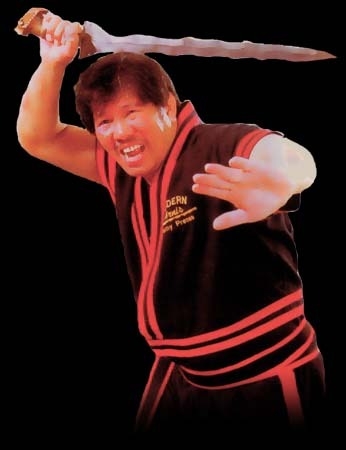
Modern Arnis is the system of Filipino martial arts founded by the late Remy Presas as a practical self-defense system.
His goal was to create an injury-reducing training method and an effective self-defense system that could preserve the older Arnis traditions. The system is derived principally from the Presas family style of the bolo and the stick-dueling art of Balintawak Eskrima, with influences from other Filipino and Japanese martial arts.
Filipino martial arts characteristically introduce weapons from the beginning of training, and Modern Arnis is no exception. The primary weapon is the rattan stick—called a cane or baston—usually about 28 inches (71 cm) long. Students learn single- and double-stick methods, unarmed defenses against sticks, and defenses against bladed weapons.
Traditionally, practitioners struck an opponent’s hand or forearm rather than the opponent’s cane. This combat principle became known as “defanging the snake”: removing the opponent’s ability to hold a weapon. Because that approach made training painful and discouraged newcomers, Professor Presas modernized practice by teaching cane-on-cane contact. This safer method helped attract students and allowed the art to be taught in the Philippine school system, while “defanging the snake” remained an important practical principle. Empty-handed, the same idea is known as limb destruction.
Training includes empty-hand striking, locking, throwing, single and double stick, espada y daga, sinawali, tapi-tapi, partner drills, and anyo—solo forms performed with and without the stick. Students learn “the art within your art,” adapting Modern Arnis to previous training; “the flow,” responding smoothly to change; and tapi-tapi, countering an opponent’s counter.
The system also reflects elements of Judo, Shotokan Karate, and Wally Jay’s Small Circle Jujutsu.
Single stick, double stick, espada y daga, sinawali, and practical weapon defense.
Striking, locks, throws, trapping, limb destruction, and adaptable self-defense.
Anyo, partner drills, the art within your art, the flow, and tapi-tapi.
Remy Presas studied his family’s system from an early age. He later studied Shotokan Karate and Judo, earning high rank in both, while also pursuing other Filipino systems—most notably Venancio Bacon’s Balintawak.
Beginning with a small gymnasium in Bacolod in the 1950s, he worked to share the art with local youth as both a cultural legacy and a form of physical development. He taught at the University of Negros Occidental-Recoletos and continued modifying and improving the system to renew interest in the Philippines’ indigenous martial arts.
In 1969, he moved to Manila at the request of a government official and formed the Modern Arnis Federation of the Philippines. He continued developing and spreading the art through teaching and books until political circumstances led him to relocate to North America.
There he met Wally Jay, George Dillman, and other martial artists who influenced Modern Arnis. Locks from Small Circle Jujutsu became part of the evolving system, which continued to grow while retaining its focus on the single stick and practical self-defense.
Throughout the 1980s and 1990s, Professor Presas traveled extensively, teaching seminars and weekend camps around the world—especially in the United States—and producing books and videos. The International Modern Arnis Federation Philippines became a leading organization in the Philippines, the Deutschen Arnis Verband served a leading role in Germany and Europe, and IMAF became the principal organization in the United States.
Professor Remy Presas passed away in 2001. The Masters of Tapi-Tapi titles were created to provide leadership and steerage for IMAF following his passing. His art and legacy live on through thousands of practitioners worldwide and through IMAF’s continuing leadership.
The clearest way to honor Professor Presas is to practice, teach, and pass the art forward.